Have you ever had joint pain when waking up or felt that your back is more hunched than usual? These conditions may be signs of bone and joint problems that many adults experience. Two diseases often mentioned are osteoporosis and osteoarthritis. Although they may sound similar, they are fundamentally different.
According to the Kementerian Kesehatan RI (Ministry of Health of the Republic of Indonesia), about one in three women and one in five men over age 50 are at risk of osteoporosis. Meanwhile, data from the Riset Kesehatan Dasar (Riskesdas) 2018 shows an increase in cases of joint pain due to osteoarthritis, especially in people aged 45 years and above.
To avoid misunderstanding symptoms and management steps, let’s delve deeper into the differences between osteoporosis and osteoarthritis, and how to maintain bone and joint health early.
What is Osteoporosis?
Osteoporosis is a degenerative bone disease marked by a decline in bone mass and density. This condition makes bones fragile and easily broken—especially in the spine, wrist, and hip.
This disease is often nicknamed the “silent disease” because it does not produce noticeable symptoms until a bone fracture occurs. People often only realize it when they experience a fracture from a minor activity like bending or lifting a light object.
Causes and Risk Factors for Osteoporosis
Some factors that increase the risk of osteoporosis include:
Long-term deficiency of calcium and vitamin D.
Menopause, due to the drop in estrogen which plays a role in maintaining bone density.
Natural aging that progressively reduces bone mass.
Lack of physical activity, especially weight-bearing exercise like walking or yoga.
Smoking and excessive alcohol consumption that disrupt calcium absorption.
Genetic factors and a family history of osteoporosis.
Common Symptoms of Osteoporosis
A hunched posture or reduced height.
Back pain due to small fractures (compression fractures).
Increased risk of bone fractures, even from light trauma.
To detect this disease, doctors usually conduct a bone densitometry (BMD Test) to measure Bone Mineral Density. This test is particularly important for post-menopausal women and men over 50.
What is Osteoarthritis?
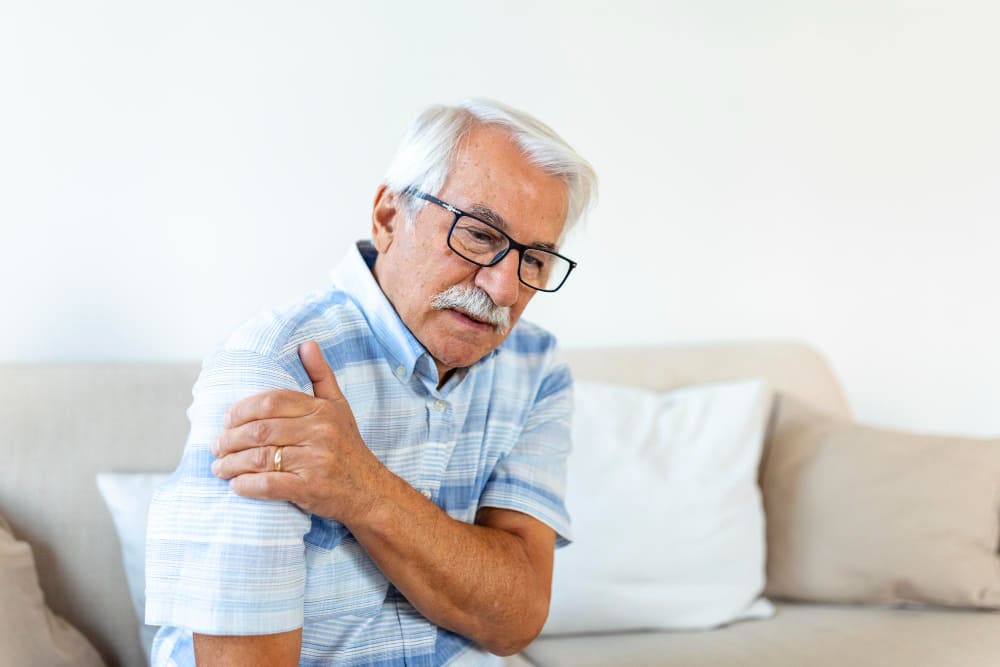
Osteoarthritis is a degenerative joint disease that occurs because of damage to the cartilage covering the ends of bones. When this protective layer thins, the bones rub against each other, causing pain, stiffness, and swelling in the joint.
This condition most commonly affects the knees, hips, hands, and spine. According to the Perhimpunan Reumatologi Indonesia (IRA), osteoarthritis is the primary cause of joint disability among adults in Indonesia.
Causes and Risk Factors for Osteoarthritis
Aging, which causes cartilage to lose elasticity.
Obesity, because excess weight places extra pressure on joints.
History of joint injury or repetitive physical activity such as squatting or stair-climbing.
Genetics and congenital joint shape abnormalities.
A sedentary lifestyle which reduces circulation and joint flexibility.
Common Symptoms of Osteoarthritis
Joint pain that worsens after activity.
Stiffness of the joint in the morning or after long sitting.
Mild swelling and a ‘cracking’ sound when the joint is moved.
Limited mobility, especially in the knees and hips.
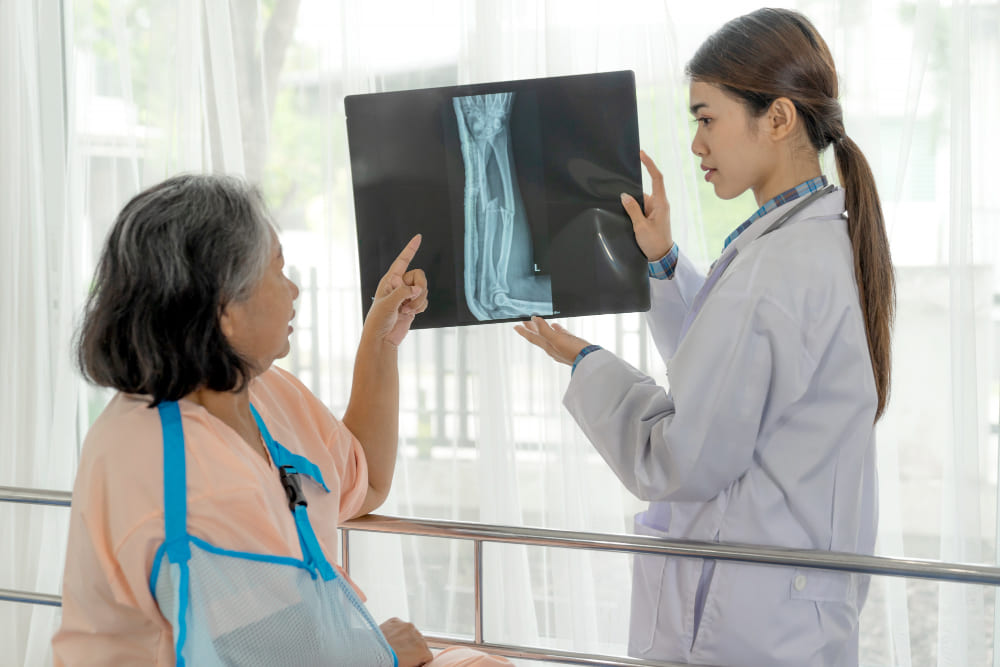
Diagnosis is performed through X-ray or MRI of the joint to view cartilage damage and bone shape around the joint. Doctors may also do a physical exam and assess the joint’s range of motion.
Differences between Osteoporosis and Osteoarthritis
Many people still believe osteoporosis and osteoarthritis are the same because both affect the musculoskeletal system. However, they differ in terms of location, cause, disease process, symptoms, and treatment. Understanding these differences is important so as not to misdiagnose or mistreat.
1. Affected Body Parts
Osteoporosis affects the internal structure of bones. The disease causes bones to lose minerals—especially calcium and phosphorus—thus becoming porous and easily fractured. The parts most often affected are the spine, hip, and wrist.
In contrast, osteoarthritis attacks the external part of joints, specifically the cartilage that serves as a protective cushion between bones. When cartilage thins, the bone ends rub against each other causing degenerative joint inflammation, pain, and swelling.
2. Causes and Mechanism
In osteoporosis, the main process is an imbalance between bone formation and bone resorption. As we age, our body loses bone mass faster than it forms new bone. This condition is exacerbated by long-term calcium and vitamin D deficiency, hormonal imbalance (especially estrogen in menopausal women), and a sedentary lifestyle.
Meanwhile, in osteoarthritis the main cause is mechanical and degenerative damage due to long-term repetitive joint use. Factors like obesity, joint injury, aging, and congenital joint shape abnormalities speed up cartilage thinning. Friction between bones triggers degenerative inflammation of the joint that causes chronic pain.
3. Clinical Symptoms
The most noticeable difference is in the initial symptoms.
Osteoporosis is often called the “silent disease” because it does not cause pain until a fracture happens. Early signs are usually a hunched posture, reduced height, and back pain due to minor fractures.
Osteoarthritis, on the other hand, is marked by joint pain during activity such as walking, climbing stairs, or gripping something. Other typical symptoms are morning joint stiffness, swelling, and a cracking sound when the joint is moved. Over time, the patient experiences limited mobility and difficulty moving freely.
4. Diagnosis Process
To confirm osteoporosis, doctors usually recommend a Bone Mineral Density (BMD Test) using bone densitometry. This test measures mineral levels in the bones, especially in the spine and hip. A T-score below –2.5 is a strong indicator of osteoporosis.
For osteoarthritis diagnosis, joint X-ray or MRI is used. Radiographic images will show joint space narrowing, bone thickening at the edges of the joint (osteophytes), and cartilage thinning. Doctors also perform a physical exam and assess the joint’s range of motion to determine the severity.
5. Possible Complications
Osteoporosis increases the risk of spontaneous fractures, especially in post-menopausal women. Hip fractures or spinal fractures can cause permanent disability, chronic pain, and a reduced quality of life.
For osteoarthritis, the main complication is the long-term decline in joint function. If left untreated, patients may develop joint deformities or even require joint replacement surgery (arthroplasty) to restore mobility.
6. Treatment and Management
Treatment for osteoporosis focuses on increasing bone density and preventing fractures. Therapies include:
Regular intake of calcium and vitamin D supplements.
Hormone therapy for post-menopausal women to maintain estrogen levels.
Weight-bearing exercises like walking, yoga, or balance training.
Bone-strengthening medications such as bisphosphonates as prescribed by a doctor.
Treatment for osteoarthritis focuses on reducing pain and slowing down joint damage. Management includes:
Non-steroidal anti-inflammatory drugs (NSAIDs) to control inflammation.
Physiotherapy and gentle motion exercises to maintain joint flexibility.
Weight loss for obese patients to reduce pressure on joints.
In severe cases, corticosteroid injections or joint replacement surgery may be chosen.
7. Prevention
Preventing osteoporosis and osteoarthritis both start from a healthy lifestyle early on. However, the focus is different:
For osteoporosis: it’s important to ensure adequate intake of calcium, vitamin D, and regular weight-bearing exercise.
For osteoarthritis: avoid excessive body weight, pay attention to your posture when sitting and walking, and engage in physical activity that does not place excessive stress on joints.
8. Impact on Quality of Life
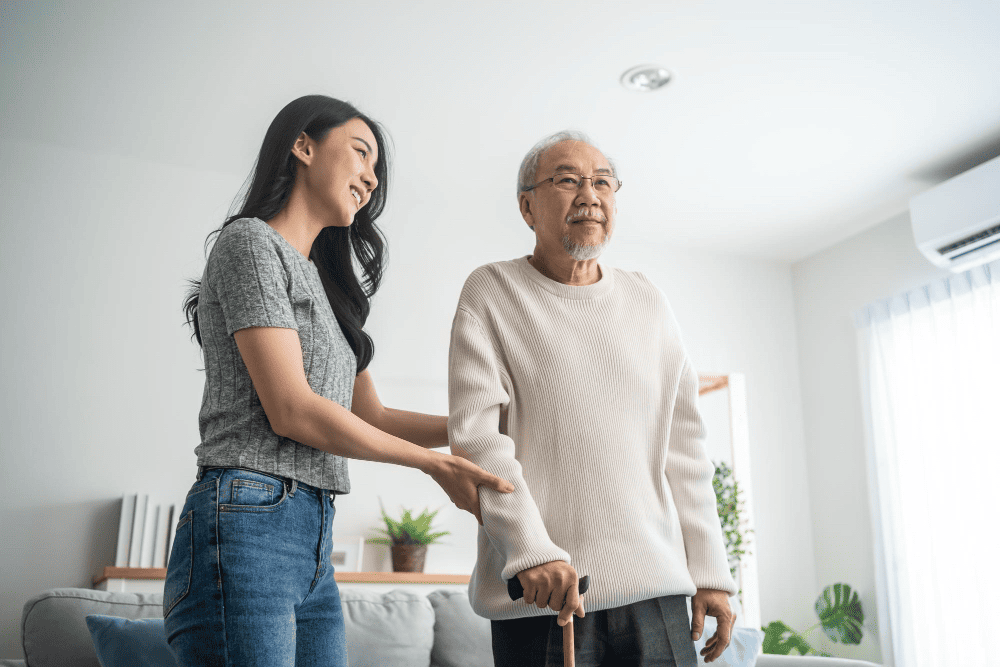
Osteoporosis is more likely to restrict activity because of fracture risk, while osteoarthritis hampers mobility because of joint pain. Both can lead to dependency in daily activities if not managed properly. In Indonesia, many elderly people end up with movement limitations or minor disabilities because of delayed detection of these diseases.
Maintaining Bone and Joint Health Early
Prevention is better than cure. The key to maintaining bone and joint health lies in an active lifestyle and balanced nutrition. Some simple steps that can be applied include:
Consume calcium and vitamin D from milk, fish, and green vegetables.
Do light exercise regularly such as brisk walking or yoga.
Avoid smoking and excessive alcohol consumption.
Maintain an ideal body weight to prevent excess pressure on joints.
Have regular bone and joint check-ups, especially for women after menopause.
With the right lifestyle, the risk of osteoporosis and osteoarthritis can be significantly reduced, keeping your mobility and quality of life optimal well into later years.
Adult Heavy-Flow Diaper “Parenty”
As people age, some begin experiencing urinary incontinence — the inability to hold urine often occurring alongside bone or joint problems.
To maintain comfort and confidence, “Parenty Heavy Flow” is introduced as an adult pull-up diaper with six times higher absorption capacity that lasts up to 12 hours.
Its antibacterial fabric helps prevent irritation, while the soft surface and 360° elastic design ensure you remain free to move and feel fresh all day.
With “Parenty Heavy Flow”, you can stay active and confident, even when facing challenges such as osteoporosis or osteoarthritis.
Although both attack the musculoskeletal system, osteoporosis is related to decreased bone density, while osteoarthritis concerns cartilage damage and joint inflammation. Both can be prevented through an active lifestyle, balanced nutrition, and regular check-ups. Education and awareness early on are key to maintaining mobility and quality of life as you age.