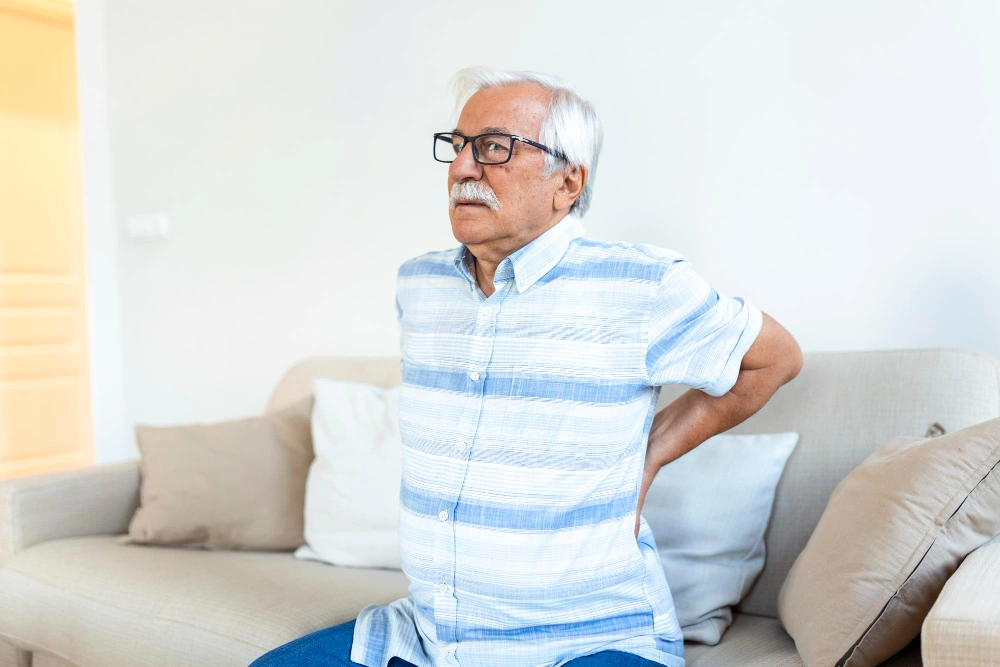
Tailbone pain while sitting is a common complaint among older adults. It can make simple activities such as sitting, standing, and walking uncomfortable, affecting overall quality of life.
If you are caring for an elderly parent, understanding the causes and treatment options is important. Early and appropriate care can reduce discomfort and help your loved one remain as active and comfortable as possible.
Why Are Older Adults More Prone to Tailbone Pain?
As people age, natural changes in the body make the tailbone more vulnerable to pain and pressure.
1. Reduced Bone Density
Loss of bone density makes bones more fragile and sensitive, even to mild pressure from prolonged sitting.
2. Thinning of Protective Fat Padding
The fat surrounding the tailbone acts as a natural cushion. As this layer becomes thinner with age, more pressure is placed directly on the bone.
3. Changes in Posture
Age-related changes in posture can increase pressure on the tailbone, particularly when sitting on hard surfaces.
Symptoms of Tailbone Pain While Sitting
Recognizing the symptoms early can help ensure timely treatment.
1. Pain After Sitting for Long Periods
Pain often develops or worsens after sitting for an extended time, especially on hard chairs without cushioning.
2. Pain When Standing Up
Moving from a sitting to a standing position may trigger a sharp pain around the tailbone.
3. Discomfort in the Lower Back Area
Older adults may experience aching, dull pain, or general discomfort at the base of the spine.
Common Causes of Tailbone Pain in Older Adults
Several factors may contribute to tailbone pain.
1. Prolonged Sitting
Sitting for long periods, especially with poor posture, places continuous pressure on the tailbone.
2. Falls or Previous Injuries
A history of falls or direct impact to the pelvic area may cause lingering tailbone pain.
3. Underlying Medical Conditions
Conditions such as osteoarthritis or spinal disorders can contribute to or worsen tailbone pain.
How to Treat Tailbone Pain
Treatment typically begins with simple home care and may progress to medical evaluation if symptoms persist. These recommendations are also consistent with NHS self-care guidance for managing tailbone pain.
1. Use a Seat Cushion
A specially designed coccyx cushion or donut cushion helps reduce direct pressure on the tailbone while sitting.
2. Apply Cold or Warm Compresses
Cold compresses may help reduce inflammation during the first few days after pain begins, while warm compresses can relieve muscle tension and improve comfort afterward.
3. Improve Sitting Posture
Sit upright with proper back support and avoid slouching to minimize pressure on the tailbone.
4. Consult a Doctor
If the pain persists, becomes severe, or is associated with a fall, fever, numbness, or bowel or bladder problems, seek medical evaluation to determine the underlying cause.
Can Tailbone Pain Go Away on Its Own?
In mild cases, tailbone pain often improves gradually with rest and reduced pressure on the affected area. This is especially true when the pain results from prolonged sitting or minor strain.
However, recovery may take longer in older adults. Proper care and monitoring are important to prevent the condition from worsening.
How to Prevent Tailbone Pain in Older Adults
Preventive measures can help reduce the likelihood of recurring pain.
1. Avoid Sitting for Too Long
Encourage standing up, stretching, or walking briefly every 30–60 minutes to relieve pressure on the tailbone.
2. Choose Comfortable Seating
Use chairs with adequate cushioning or supportive seat pads to reduce direct pressure.
3. Maintain Good Posture
Proper posture helps distribute body weight evenly and reduces stress on the tailbone.
Conclusion
Tailbone pain while sitting is a common issue among older adults due to age-related changes such as reduced bone density, loss of protective cushioning, prolonged sitting, or certain medical conditions. Conservative treatments—including supportive cushions, warm or cold compresses, posture correction, and appropriate rest—can often relieve symptoms and improve daily comfort.
During recovery, some older adults may spend more time resting or have reduced mobility. Parenty Adult Pants Soft provides soft, comfortable, and highly absorbent protection to help keep the skin clean and dry, making daily care easier for both seniors and their caregivers.