
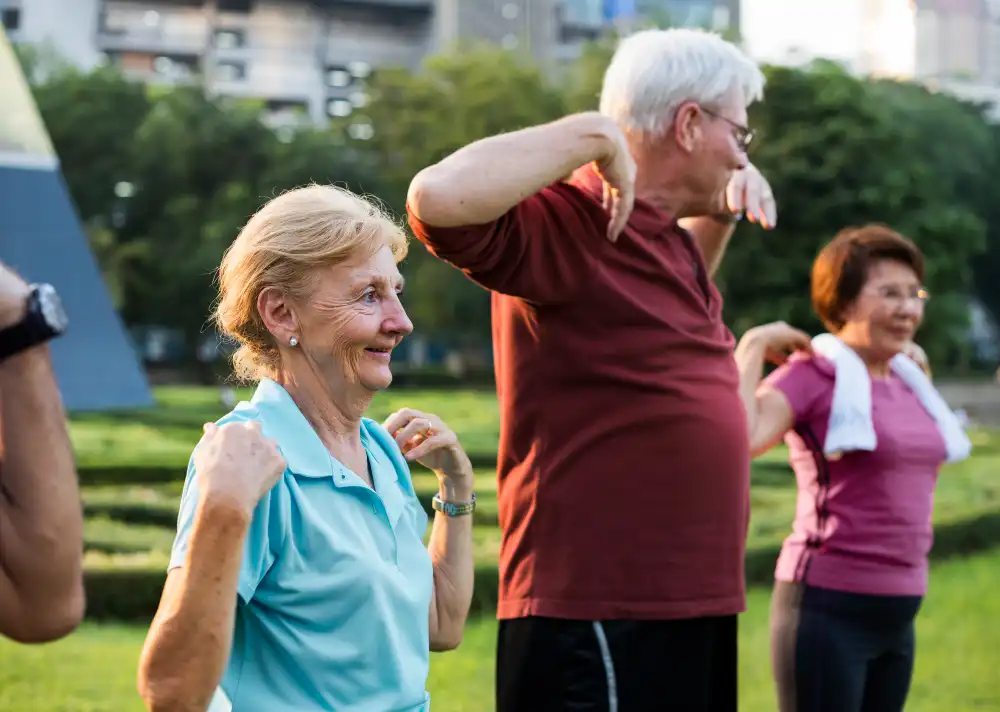
As people age, their bodies undergo various changes, including changes in muscle strength, balance, and joint mobility. However, these changes do not mean that older adults have to stop doing the activities they enjoy or limit their daily routines.
Staying active is actually one of the most important ways to maintain physical function as we age. Physical activities performed according to individual abilities can help seniors maintain mobility, body strength, and independence in their daily lives.
One activity worth trying is joint exercises for seniors. From yoga to light strength training, the following exercises can be adapted to each older adult’s physical condition and abilities.
Read Also: Fruits That Are Good for Senior Bone Health
Benefits of Joint Exercises for Seniors
Joint exercises for seniors are designed to keep the body active through a combination of movements that support flexibility, muscle strength, balance, and range of motion. Physical activity may also help reduce pain and improve physical function in people with arthritis or joint inflammation when performed at an appropriate type and intensity.
The benefits extend beyond joint health. Well-trained muscles provide better support for the joints and help seniors perform functional activities, such as getting up from a chair, walking, climbing stairs, carrying light objects, or playing with their grandchildren.
In addition, balance training is particularly important for adults aged 65 and older. According to the Centers for Disease Control and Prevention (CDC), older adults are encouraged to combine aerobic activities, muscle-strengthening exercises at least two days a week, and activities that improve balance as part of their regular physical activity routine.
Maintaining mobility gives older adults a better opportunity to continue participating in activities that are meaningful to them. Family members can offer support by accompanying them or helping choose safe activities without immediately taking over tasks they can still perform independently.
Types of Joint Exercises for Seniors to Try
There is no single type of exercise that works for every older adult. Exercises should be tailored to physical ability, balance, injury history, and health conditions such as osteoarthritis, osteoporosis, heart disease, or a history of joint surgery.
1. Yoga and Pilates
Yoga combines flexibility, balance, and strength training through movements such as cat-cow, seated spinal stretch, and chair yoga. Meanwhile, Pilates focuses on controlled movements and strengthening the core muscles that help support body posture.
Some movements can be modified using a chair or performed while seated, making them more suitable for seniors with limited mobility.
2. Tai Chi
Tai Chi is an exercise that involves a series of slow, controlled movements, including weight shifting, coordination, and balance. This makes it a relatively joint-friendly activity.
The CDC even recognizes Tai Chi as a joint-friendly activity for people with arthritis because it places relatively little stress on the joints while helping the body stay active.
3. Light Bodyweight Exercises
Exercises that use body weight, such as chair squats, wall push-ups, calf raises, and chair sit-to-stands, can help strengthen major muscle groups, including the quadriceps, hamstrings, glutes, calves, chest, and shoulders, without requiring special equipment.
Exercises can begin with the most comfortable movements and a number of repetitions suited to individual abilities. As a general guideline, the CDC identifies 8–12 repetitions as one set for muscle-strengthening exercises.
4. Light Strength Training
Strength training can be performed using lightweight dumbbells, resistance bands, or exercise machines. Its purpose is to strengthen the muscles that support the joints, such as the quadriceps around the knees and the gluteal muscles around the hips.
The resistance should be light enough to allow proper exercise technique without causing joint pain. It can then be increased gradually as the body becomes more accustomed to the exercises.
Tips for Doing Joint Exercises Safely
The goal of exercise is not to push the body beyond its limits but to help older adults stay active according to their physical abilities. Since every senior has different needs, an exercise that feels easy for one person may not be suitable for another.
Here are some things to keep in mind before and during exercise:
- Start slowly. Seniors who have not been physically active can begin with short sessions, such as 5–10 minutes, and gradually increase the duration according to their abilities. Even short periods of activity provide benefits and can be accumulated throughout the day.
- Choose low-impact movements. Walking, cycling, swimming, water-based exercises, and Tai Chi are examples of relatively joint-friendly activities.
- Pay attention to your body’s response. Stop exercising if you experience sharp pain, dizziness, unusual shortness of breath, loss of balance, or other concerning symptoms.
- Use support when needed. Chairs, walls, or handrails can provide stability when performing balance exercises or standing movements.
- Wear comfortable clothing and footwear. Choose clothing that allows free movement and footwear that provides a stable grip, especially during standing exercises.
- Consider existing health conditions. Seniors with chronic illnesses, disabilities, balance problems, osteoporosis, severe joint pain, or other medical conditions should consult a doctor or healthcare professional about suitable exercise types and intensity.
Family members can also accompany older adults during exercise, especially when they are trying a new activity. However, whenever possible, give them the freedom to choose their movements, set their own pace, and perform activities independently. Support does not always mean taking over.
Read Also: Variations of Safe Osteoporosis Exercises for Seniors
Keeping the joints active can help older adults maintain their mobility and continue enjoying activities that are meaningful to them. Yoga and Pilates, Tai Chi, bodyweight exercises, and light strength training can all be suitable options, provided their types and intensity are adjusted to individual needs.
Comfort during daily activities is equally important, including for older adults who experience mild incontinence but still have an active lifestyle. Parenty Adult Pants Soft is designed with a slim, body-hugging fit and features Luxurious Soft for an extra-soft surface, 3D Surface technology to help distribute liquid for faster and more even absorption, 360° Elastic for a snug fit that helps prevent leakage, and 4x absorption capacity.
With comfortable protection, conditions such as incontinence do not have to become a reason to stop moving or give up favorite activities. Choose Parenty Adult Pants Soft to help older adults stay comfortable, active, and confident throughout their daily routines.
Parenty understands that caring is not just about providing assistance. It is also about supporting older adults so they can continue living comfortably as themselves, staying active, enjoying their daily activities, and maintaining their independence.
1. What is the best time for seniors to do joint exercises?
Joint exercises can be performed whenever the body feels most comfortable and energized. Avoid forcing exercise when feeling unwell, extremely tired, or experiencing severe joint pain.
2. Can seniors who use a walking cane still do joint exercises?
Yes, but the type of exercise should be adjusted according to their physical abilities and the reason they need a walking aid. Seated exercises or movements performed while holding onto a stable support may be suitable alternatives. Consulting a doctor or physiotherapist is recommended if mobility problems are present.
3. Do joint exercises need to be done every day?
Not all types of exercise need to be performed every day. As a general guideline, adults aged 65 and older are encouraged to do muscle-strengthening activities at least two days a week and include aerobic and balance activities in their weekly routine.