
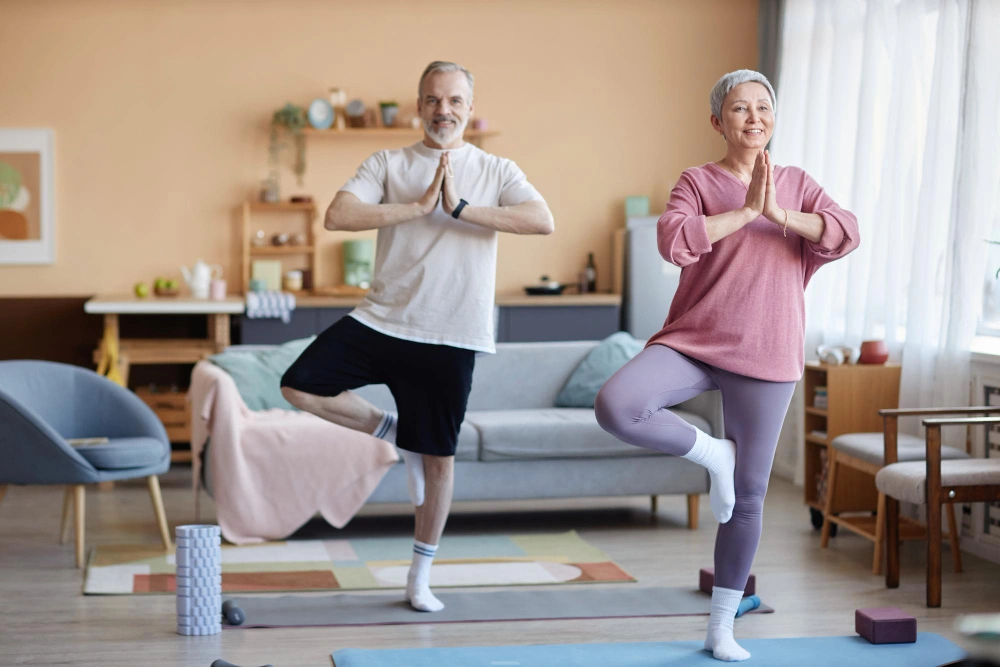
Osteoporosis exercises are low-impact physical activities that help maintain bone density, strengthen muscles, and improve balance in older adults. Safe exercises for seniors include standing on one leg, stretching, leg raises, marching in place, squats, foot stomps, hamstring curls, and shoulder lifts.
Osteoporosis exercises are one of the most commonly recommended forms of physical activity for seniors experiencing age-related bone loss. These exercises are designed with gentle movements that are safe for older adults while helping maintain bone health, muscle strength, and overall balance.
For families caring for an elderly loved one with osteoporosis, choosing the right type of exercise is an important step toward preserving their quality of life. Performing osteoporosis exercises regularly allows seniors to stay active while reducing the risk of falls that could lead to fractures or other serious injuries.
What Are Osteoporosis Exercises?
Osteoporosis exercises are a series of low-impact movements specifically designed to help older adults maintain bone density, muscle strength, flexibility, and balance. These exercises place minimal stress on the joints while providing enough stimulation to support healthy bones.
The movements are performed gradually and in a controlled manner, allowing seniors to remain physically active while minimizing the risk of injury. Regular osteoporosis exercise also helps older adults maintain their mobility and independence, making it an important part of a healthy aging lifestyle.
Benefits and Recommended Duration of Osteoporosis Exercises for Seniors
Practicing osteoporosis exercises regularly offers numerous physical and mental health benefits for seniors. To maximize these benefits while exercising safely, it’s important to understand both the advantages of these workouts and the recommended exercise duration.
1. Benefits of Osteoporosis Exercises
Regular osteoporosis exercises can significantly improve the overall health and well-being of older adults by protecting bone health, enhancing physical function, and supporting emotional wellness.
Helps Maintain Bone Density
Weight-bearing and resistance movements stimulate bone-forming cells, helping slow the loss of bone mass associated with osteoporosis.
Improves Balance
These exercises enhance coordination and stability, making it easier for seniors to walk and stand safely while reducing the risk of falls.
Strengthens Muscles
Stronger muscles provide better support for the bones and joints, helping reduce strain during daily activities.
Supports Mental Well-Being
Physical activity promotes the release of endorphins, which can improve mood, reduce anxiety, and help alleviate symptoms of depression commonly experienced by older adults.
Enhances Overall Fitness
Regular movement improves blood circulation, increases energy levels, and helps seniors stay physically active without becoming easily fatigued.
2. Recommended Exercise Duration
For optimal results, seniors should perform osteoporosis exercises for approximately 30 to 45 minutes per session, ideally two to three times per week.
Each workout should include both a warm-up and a cool-down to prepare the muscles for exercise and reduce the risk of strains or injuries.
Osteoporosis Exercise Variations
Choosing appropriate exercises is essential to maximize the benefits while avoiding unnecessary stress on the joints. The following low-impact exercises are safe, practical, and can easily be incorporated into a senior’s daily routine at home.
1. Standing on One Leg
This balance (proprioception) exercise helps improve stability and reduce the risk of falls. Stand upright while holding the back of a sturdy chair for support. Slowly lift one foot approximately 2–4 inches (5–10 cm) off the floor and maintain your balance for 10–15 seconds. Lower your foot and repeat with the opposite leg.
2. Stretching
Stretching exercises, whether dynamic or static, help maintain joint flexibility and prevent muscle stiffness in older adults. Examples include opening both arms wide to stretch the chest muscles or slowly rotating the shoulders for 8 repetitions.
3. Leg Raises
Straight leg raises strengthen the quadriceps (front thigh muscles) and hip flexors, both of which play an important role in maintaining stability while walking.
Sit upright in a chair without leaning against the backrest. Extend one leg straight in front of you until it is about 6 inches (15 cm) above the floor, hold the position for 5 seconds, then slowly lower it. Repeat with the other leg.
4. Marching in Place
Marching in place is a low-impact cardiovascular exercise that safely increases heart rate without placing excessive stress on the spine.
March comfortably for 2–3 minutes, lifting your knees toward hip height while keeping your back straight and maintaining good posture throughout the exercise.
5. Squats
A modified bodyweight squat using a chair is highly effective for strengthening major muscle groups, including the gluteal muscles and thigh muscles, which support the body during standing and walking.
Slowly lower your hips as though you are about to sit down until your hips lightly touch the edge of a chair. Then return to a standing position. Perform 8–10 repetitions.
6. Foot Stomps
Foot stomps are a weight-bearing exercise that helps stimulate bone-forming cells (osteoblasts), particularly in the femur (thigh bone).
Simply lift one foot slightly and gently stomp it onto the floor, as if crushing an empty can. Repeat the movement 10–12 times on each leg.
7. Hamstring Curls
Hamstring curls strengthen the muscles at the back of the thigh, helping stabilize the knee joint and reducing the risk of falls caused by poor balance.
Stand upright while holding onto a sturdy table or countertop for support. Bend one knee, bringing your heel toward your buttocks until it forms approximately a 90-degree angle. Hold for 3 seconds, then slowly lower your foot and repeat on the opposite side.
8. Shoulder Lifts
Shoulder lifts, also known as scapular elevation exercises, strengthen the upper back and shoulder muscles, particularly the trapezius and muscles surrounding the shoulder blades.
Hold a light weight, such as a 330 ml water bottle, in each hand. Slowly raise both shoulders toward your ears, hold the position for 3 seconds, then gently relax your shoulders back down.
Tips for Exercising Safely with Osteoporosis
Although osteoporosis exercises are considered low-impact, they should still be performed carefully to prevent injuries. Family members or caregivers can also help ensure seniors exercise safely and comfortably.
1. Wear Comfortable, Supportive Footwear
Choose shoes with non-slip soles that provide good stability while moving. Proper footwear helps reduce the risk of slipping and falling during exercise.
2. Avoid Sudden Movements
Quick or jerky movements can increase the risk of injuries to the muscles, joints, and bones. Perform each exercise slowly, smoothly, and in a controlled manner.
3. Exercise According to Your Physical Condition
Every senior has different physical abilities, so the intensity of exercise should be adjusted accordingly. If you experience pain, dizziness, or excessive fatigue, stop exercising and rest immediately.
4. Exercise in a Safe Environment
Make sure the exercise area is spacious, free from obstacles that could cause tripping, and has a non-slip surface. A safe environment significantly reduces the risk of accidents.
5. Consult Your Doctor
If you have severe osteoporosis or other underlying medical conditions, consult your healthcare provider before starting a regular exercise program. Your doctor can recommend exercises that are appropriate for your health condition.
Other Physical Activities for Osteoporosis
Besides osteoporosis exercises, several other forms of physical activity can help maintain bone health and keep seniors active.
1. Walking
Walking is one of the easiest and safest exercises for most older adults. It helps strengthen muscles, supports heart health, and improves balance.
2. Stationary Cycling
Using a stationary bike improves cardiovascular fitness without placing excessive stress on the joints. It is also an excellent indoor exercise option during bad weather.
3. Swimming
Swimming works nearly every major muscle group while improving overall fitness. The buoyancy of water reduces pressure on the joints, making movement more comfortable for seniors.
4. Tai Chi
Tai Chi is a gentle exercise that combines slow, controlled movements with deep breathing. It helps improve balance, coordination, flexibility, and concentration, while also reducing the risk of falls.
Conclusion
Osteoporosis exercises are a safe and effective way for seniors to maintain bone health, improve balance, and strengthen muscles. To achieve the best results, these exercises should be performed regularly, adapted to individual physical abilities, and supported by family members or caregivers whenever necessary.
In addition to osteoporosis exercises, activities such as walking, swimming, stationary cycling, and Tai Chi can also help older adults stay active, independent, and maintain a better quality of life.
To make exercise routines more comfortable for seniors living with urinary incontinence, choose Parenty Adult Pants Soft. These adult pull-up diapers feature an ultra-soft, cloth-like surface, highly elastic materials, and excellent absorbency to help seniors stay dry, comfortable, and confident while remaining active.
Frequently Asked Questions (FAQs)
1. Should osteoporosis exercises be performed every day?
Not necessarily. Seniors are generally encouraged to perform osteoporosis exercises two to three times per week for the best results while allowing adequate recovery time.
2. What is the best time of day to do osteoporosis exercises?
Morning or late afternoon is often the most comfortable time because the body is well-rested and temperatures are typically cooler.
3. Can seniors with knee pain perform osteoporosis exercises?
Yes. Seniors with knee pain can still exercise, provided they choose low-impact movements that match their physical condition and follow their doctor’s recommendations.
4. Do osteoporosis exercises require special equipment?
No. Most osteoporosis exercises require little or no equipment. A sturdy chair or other stable support is usually sufficient.
5. How long should an osteoporosis exercise session last?
Most seniors benefit from 30 to 45 minutes per session, including warm-up and cool-down exercises. Beginners can start with shorter sessions and gradually increase the duration as their fitness improves.
6. Is Parenty suitable for active seniors who exercise regularly?
Yes. Parenty Adult Pants Soft is designed with high absorbency and soft, comfortable materials to help seniors stay dry and comfortable during physical activities. Its pull-up design also supports mobility for active older adults.
7. Is Parenty comfortable for everyday use beyond exercise?
Yes. Parenty is also comfortable for daily activities such as walking, sitting for extended periods, or relaxing at home. Its soft materials and reliable absorbency provide all-day comfort and confidence for seniors.